
 Available in US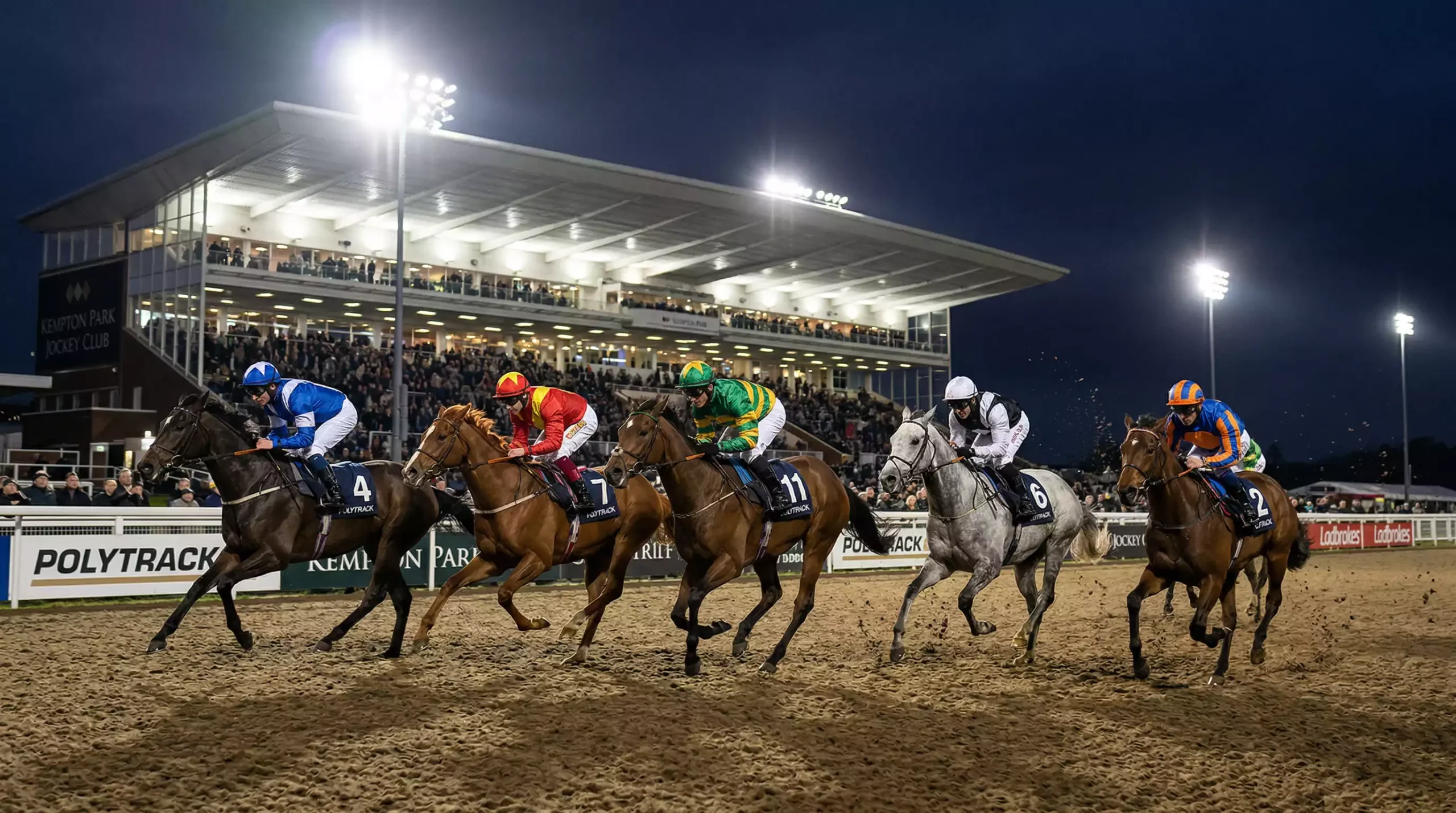
All-weather is not inferior racing — it is different racing, with different rules. That distinction is lost on the significant number of punters who treat AW cards as filler between the turf meetings, applying the same methods they use on grass and wondering why the results do not follow. The synthetic surfaces used at Britain’s all-weather tracks produce different speed figures, favour different running styles and reward different types of horse. Understanding those differences is the entry point for anyone who wants to bet AW racing profitably.
The UK runs all-weather racing year-round at six venues: Kempton Park, Lingfield Park, Wolverhampton, Chelmsford City, Newcastle and Southwell. These tracks between them use three different surface types, each with its own characteristics. The going on all-weather is officially described on a narrower scale than turf — Standard, Standard to Slow, or Slow — because synthetic surfaces absorb water more consistently than natural ground. But the differences between surfaces are at least as significant as the differences between Good and Soft on turf.
The three synthetic surface types used in UK all-weather racing are not interchangeable, and horses that excel on one may struggle on another.
Polytrack is used at Kempton, Lingfield and Chelmsford. It is a wax-coated blend of polypropylene fibres, rubber and sand, designed to produce a consistent, speed-friendly surface. Polytrack generally rides faster than the other AW surfaces and favours horses with a quick, flat action. The kickback (sand and debris thrown up by horses in front) is relatively modest compared to Fibresand. Form on Polytrack is the most transferable to fast turf, because the surface rewards similar attributes: speed, a clean action, and the ability to quicken in the closing stages.
Tapeta is used at Wolverhampton and Newcastle. It is a blend of wax-coated sand and synthetic fibres that rides slightly slower than Polytrack, with a deeper, more holding feel. Horses that handle Tapeta often have a more grinding running style — they stay on rather than quicken, and they cope with the deeper surface by maintaining a steady rhythm rather than producing a burst of acceleration. Tapeta form tends to be less transferable to fast turf but can correlate with form on softer ground, because the effort required to sustain speed on both surfaces is comparable.
Fibresand is used only at Southwell. It is the deepest and most demanding of the three surfaces — a sand-and-fibre mix that rides slower than both Polytrack and Tapeta and produces a distinctive, stamina-sapping feel. Fibresand is the most specialised surface in UK racing, and the horses that handle it well are often a breed apart. Southwell specialists — horses that win repeatedly on Fibresand but struggle on turf or other AW surfaces — are a genuine phenomenon. They tend to be strong, tough animals with the stamina to handle the deep going and the temperament to grind out results in unglamorous conditions.
The practical implication is that when assessing AW form, you need to know which surface the horse ran on previously and which it will race on today. A horse with excellent Polytrack form at Kempton is not automatically suited to Fibresand at Southwell. Turf going data, which covers 71 to 85 percent of UK races according to BetTurtle analysis, excludes AW entirely — another reason to treat all-weather form as a separate category.
The relationship between turf and AW form is not straightforward. Some elements transfer; others do not.
What transfers: Basic ability. A horse that is genuinely talented on turf — high speed figures, competitive at a decent class level — will usually be competitive on AW, particularly on Polytrack. Class par still applies: horses running below the standard speed figure for their grade on AW are unlikely to win, just as on turf. Analysis shows that horses below class par manage roughly a 4 percent win rate in handicaps regardless of surface. The underlying principle — that a minimum level of ability is required to win at any given class — holds across all surfaces.
What does not transfer: Going preference, action type and running style. A horse that excels on fast turf may handle Polytrack well but dislike Tapeta. A horse that stays on Soft turf may thrive on Fibresand but find Polytrack too quick. The action matters: horses with a round, high knee action tend to cope better with deeper surfaces than those with a flat, daisy-cutting stride. And running style interacts with surface — front-runners often have an advantage on deeper AW surfaces because the kickback discourages horses from coming from behind, a factor that barely exists on turf.
When a horse switches from turf to AW for the first time, treat it as you would a debut runner on an unknown going: the form tells you the horse has ability, but it does not tell you whether that ability will be expressed on the new surface. Check the sire’s record on AW (some sires produce a disproportionate number of AW winners), and look at whether the horse’s running style suits the surface it will race on.
All-weather racing offers specific opportunities that do not exist on turf, and the punters who exploit them have a genuine edge over those who treat AW as an afterthought.
Identify surface specialists. The AW horse population includes a significant number of specialists — horses that perform well above their general level on a particular synthetic surface. These animals are often underrated by the market because their turf form (which the casual punter focuses on) looks modest. Check a horse’s AW record separately from its turf record. A horse with a turf form string of 07080 and an AW form string of 2112 is two different animals depending on the surface.
Track recurring runners. The AW circuit produces a smaller pool of regular runners than the turf programme, which means horses reappear frequently — sometimes within two or three weeks. This repetition is an advantage for form students because it generates a larger sample of recent data than turf racing typically offers. A horse that has run six times at Wolverhampton in the past four months gives you far more to work with than one that has run twice on turf in the same period.
Pay attention to draw. Draw bias exists on AW tracks just as it does on turf, and in some cases it is more pronounced because the fields are often smaller and the tracks are tighter. Wolverhampton’s tight, left-handed oval rewards low draws in sprints. Lingfield’s tight bends favour horses that can hold a position on the inside. Kempton’s more galloping layout is fairer, but in large fields the draw can still matter in sprints.
Winter AW as value territory. The winter AW programme attracts less media attention and less public money than the turf season, which means the market is less efficient. Prices tend to be slightly more generous, and informed punters who have followed the AW form closely through the winter months have an information advantage over the casual bettor who switches off between November and March. The winter AW season is where disciplined form students can build their bank before the turf season returns.
