
 Available in US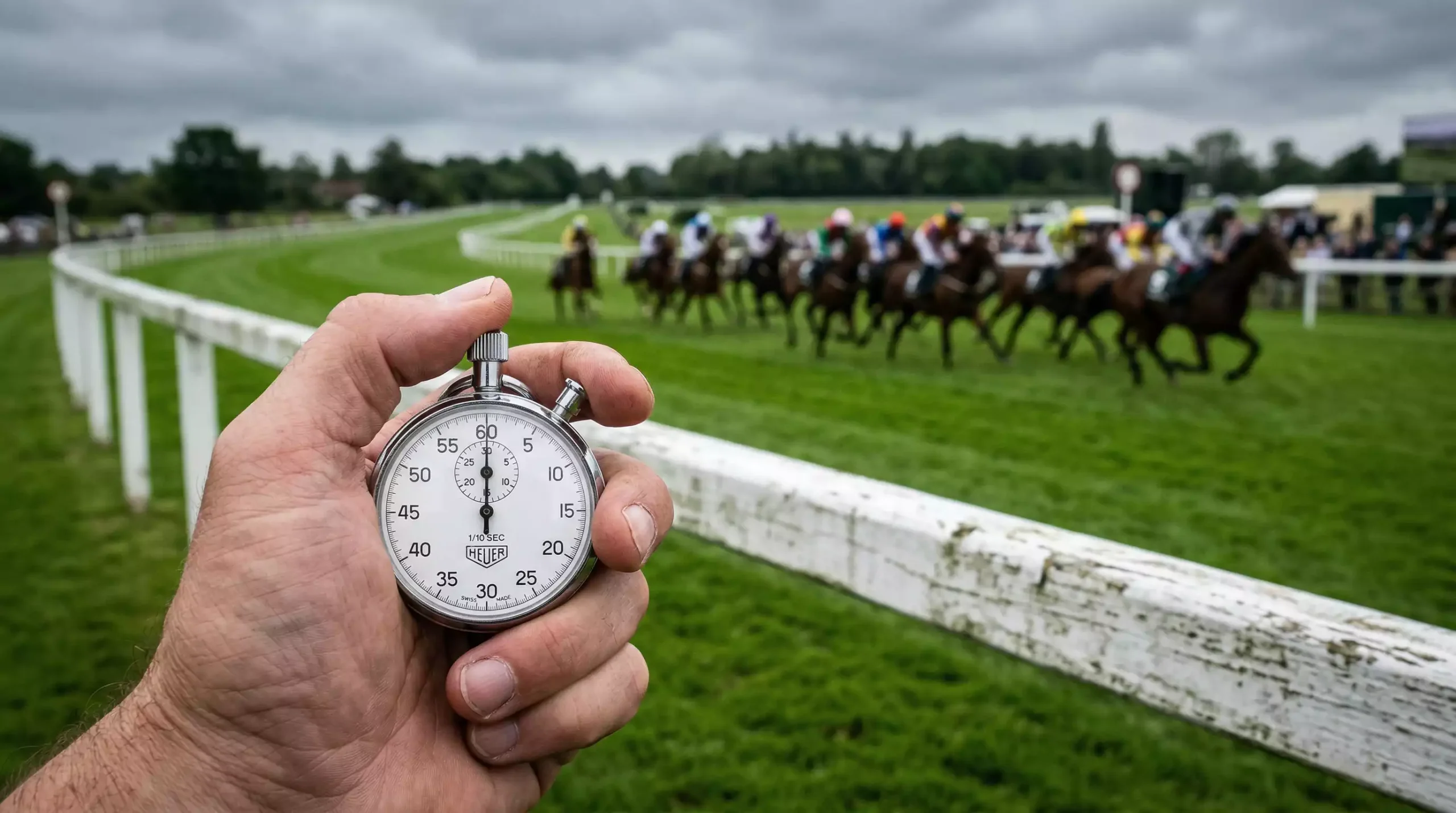
Sectional times are what speed figures were 20 years ago — early, imperfect, and full of edge. Traditional speed figures tell you how fast a horse ran from start to finish. Sectional times break that journey into segments, showing you how fast the horse ran each furlong or section of the race. The difference is the difference between knowing a car averaged 60 miles per hour on a journey and knowing it was doing 80 for the first half and 40 for the second. One number tells you the result. The other tells you the story.
For punters, that story is where hidden form lives. A horse that finished fifth, beaten three lengths, might have run the final two furlongs faster than the winner. The finishing position says it lost. The sectional times say it was unlucky, poorly positioned, or caught in the wrong part of the track. That kind of insight — invisible in conventional form — is what sectional data makes accessible, and the punters who use it are working with information that the majority of the market does not.
Sectional times reveal several specific aspects of performance that final-time figures cannot capture.
Acceleration and deceleration. Every race has a pace profile — fast early, slow middle, quick finish, or some other pattern. Sectional times map that profile by showing the speed of each section of the race. A horse that decelerated sharply in the final furlong was either tiring (a stamina issue) or had done too much work earlier (a pace issue). A horse that accelerated through the final two furlongs was finishing strongly and may have been capable of winning over a slightly longer trip. This information directly affects your assessment of the horse’s optimal distance.
True ability vs pace bias. Some races are won by horses that benefited from the pace rather than by the best horse in the field. Research by Nick Mordin found that lone front-runners outperform their odds by approximately 35 percent — not because they are better horses, but because an unchallenged lead suits their running style. Sectional times expose this advantage. A front-runner that recorded fast early sectionals and slow closing sectionals won because nothing pressured it, not because it was the most talented. Conversely, a closer that posted the fastest final-furlong sectional in a slowly run race may be worth following into a race with a more honest pace.
Hidden form in defeat. This is where sectional times offer the greatest betting edge. A horse that finished mid-division in a race but recorded the fastest closing sectional was running on strongly at the finish and likely encountered trouble or an unfavourable position earlier. The result says mid-division. The sectionals say potential winner next time out, especially if the pace scenario changes. Identifying these “sectional winners in defeat” is one of the most productive uses of the data.
Sectional timing technology has been available in some form in UK racing for over a decade, but coverage remains uneven — which is part of what makes it an edge. If the data were universally available and universally used, the market would price it in. The fact that it is not means there is still an information advantage for punters who seek it out.
Total Performance Data (TPD) is the primary provider of sectional times for UK racing, using GPS-based tracking systems installed at selected racecourses. Their coverage has expanded steadily and now includes most major flat tracks. Timeform incorporates sectional data into its analysis for subscribers, and Racing Post publishes some sectional data through its results service. The academic validation is progressing too: a 2024 study by Nottingham Trent University used quantitative timing analysis as an independent method for assessing racing surfaces, establishing that properly contextualised race times have rigorous analytical value.
The coverage gap matters for strategy. Sectional data is most complete at major flat meetings — the Heritage handicaps, the Group races, the big Saturday cards. It is thinnest at small NH meetings and midweek all-weather fixtures. This means the edge from sectional analysis is concentrated in the races where the data exists, and punters should focus their sectional work on the meetings where the information is richest rather than trying to apply it universally.
The practical application of sectional timing follows a simple workflow that you can integrate into your existing form study without overhauling your method.
Step one: identify the pace shape of the race. After a race is run, check the sectional profile. Was it a fast-early, slow-finish race (favouring front-runners)? Or a slowly run race with a fast finish (favouring closers)? At certain courses, the bias is systematic. Data from LightSpeed Stats shows that front-runners at Chester win roughly 25 percent of races compared to a national average of about 15 percent. Sectional times explain why: Chester’s tight track allows front-runners to dictate a moderate pace and sprint the short home straight unchallenged.
Step two: compare individual horse sectionals to the race average. Within a given race, identify which horses ran faster or slower than the field average in each section. A horse that was below average in the early sections but above average in the closing sections was finishing strongest. A horse that was above average early but below average late was stopping — either through fitness, distance or pace unsuitability.
Step three: flag horses for next time. When you find a horse that posted strong closing sectionals but finished out of the places, add it to a tracker. Note the conditions — the going, the distance, the pace shape. When that horse reappears in a race where the conditions are more favourable (a likely faster pace, more suitable ground, a different course that rewards closers), it becomes a live betting proposition that the market may underrate because its recent form figures do not reflect its true ability.
Step four: cross-reference with conventional form. Sectional times are most powerful when they confirm or contradict what traditional form analysis suggests. If your speed figures say a horse is the best in the race and the sectional data shows it ran the fastest closing splits last time out, the convergence strengthens your confidence. If the speed figures are strong but the sectionals reveal the horse was flattered by a slow pace — coasting on the lead without ever being pressured — the case is weaker than it looks. Use sectionals as a second opinion on the form, not as the sole basis for a selection. The two layers together give you a more complete picture than either provides alone.
Sectional timing is not yet a complete replacement for traditional speed figures — the coverage is not universal enough, and the data requires more effort to access and interpret. But for the punter willing to invest that effort, it provides a layer of form analysis that the majority of the market is not using. That is the definition of an edge, and in a market where edges are increasingly compressed, sectional times are one of the most productive places to find one.
