
 Available in US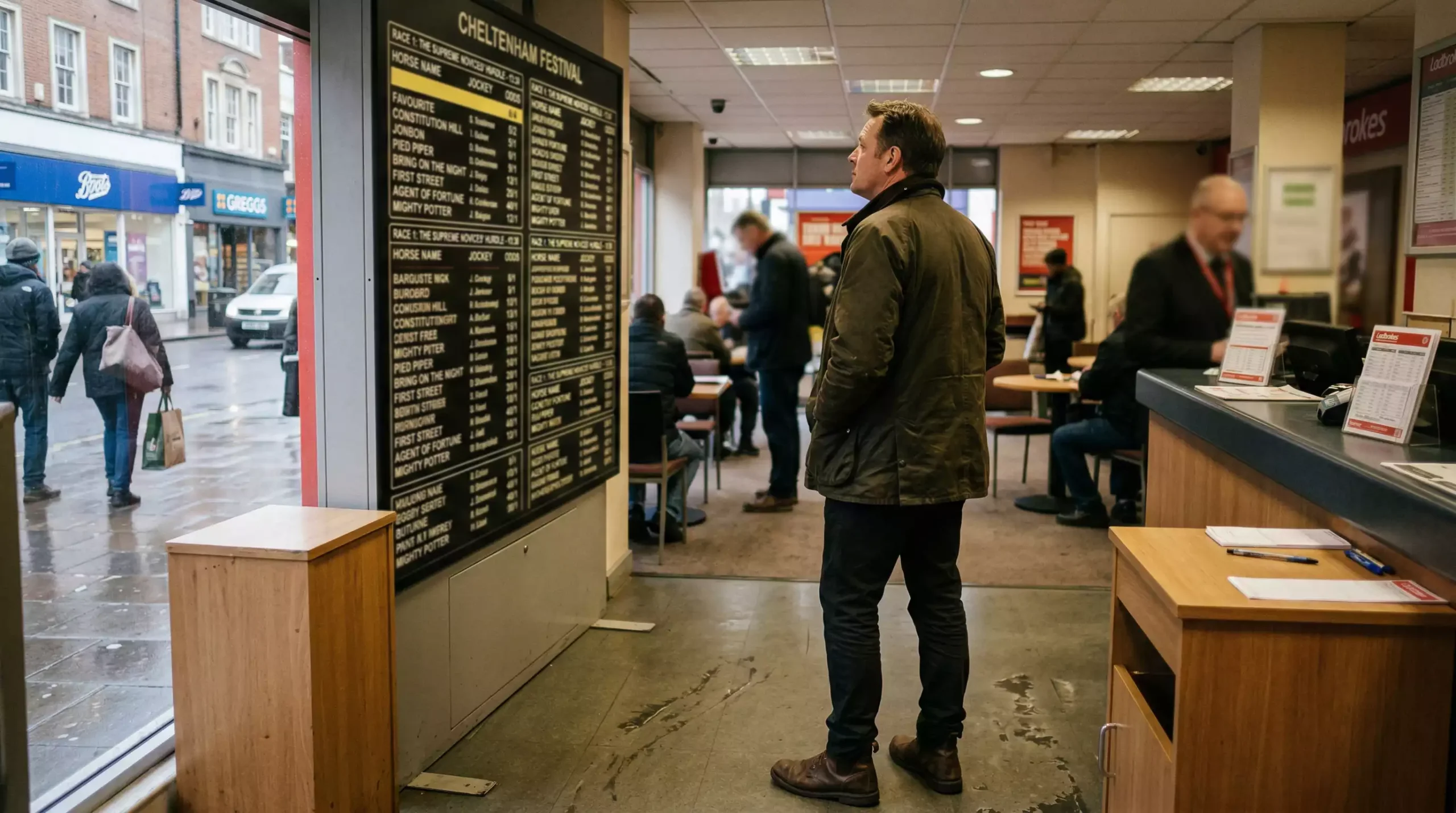
Ante-post is where information asymmetry lives — and where non-runners destroy plans. Betting on a horse days, weeks or months before a race offers the possibility of significantly better odds than will be available on the day. It also carries a risk that no other form of horse racing bet does: if your horse does not run, you lose your stake. That risk-reward balance defines ante-post betting and separates it from day-of-race selection. The punters who profit from ante-post are not gamblers chasing big prices — they are analysts who have identified value early, before the market corrects, and who manage the non-runner risk through discipline rather than hope.
An ante-post bet is any bet placed before the final declarations for a race are confirmed. On the flat, final declarations are made 48 hours before the race. Over jumps, the window is 24 hours. Any bet placed before that deadline is, by default, an ante-post bet — and the critical rule is: no refund if the horse does not run.
This “no non-runner, no bet” (no NRNB) rule is the defining feature of ante-post markets. If you back a horse at 8/1 six weeks before Cheltenham and it is withdrawn due to injury the day before the race, your stake is lost. There is no equivalent in day-of-race betting, where a non-runner at the start triggers either a rule 4 deduction or a stake refund depending on the bookmaker’s terms.
Some bookmakers offer NRNB terms on certain ante-post markets, particularly for the major festivals. These bets remove the non-runner risk but typically at shorter odds than the standard ante-post price. The trade-off is explicit: you sacrifice potential value in exchange for protection. Whether that trade-off is worthwhile depends on your assessment of the horse’s likelihood of making the race — a factor that requires its own analysis, separate from the horse’s chance of winning.
The non-runner risk has structural dimensions too. The BHA’s Director of Racing, Richard Wayman, has noted that the horse population continues to decline while the betting environment remains challenging. A smaller horse population means fewer potential runners per race, which in turn means a higher proportion of early entries may not make the final field. This trend makes ante-post risk management progressively more important for punters operating in the early markets.
The ante-post market is most inefficient — and therefore most valuable to informed punters — in three specific windows.
Immediately after a trial race. When a horse produces an impressive performance in a key trial — a Cheltenham trial at Cheltenham in January, a Guineas trial at Newbury in April — the ante-post market for the target race reacts, but not always fully. Bookmakers adjust the price, but the adjustment is often conservative because the field for the main event is not yet confirmed and the going, draw and other variables remain unknown. If the trial performance was genuinely exceptional, the ante-post price in the hours after the trial can offer value that evaporates within days as the market catches up.
When a rival is ruled out. The withdrawal of a leading contender from a major race reshuffles the competitive picture. The remaining horses all become more likely to win, but the market’s re-pricing is often uneven. The second favourite may shorten appropriately, but a horse further down the betting — perhaps a strong each-way contender that now has one fewer rival to beat — may not adjust at all. That gap between the old price and the new reality is where ante-post value sits. Data from FlatStats shows that the wider the odds, the less precisely the market calibrates probability — which means the inefficiency at longer prices is largest precisely where ante-post punters tend to operate.
Early in the season for major festivals. Cheltenham ante-post markets open months before the Festival, and the prices at that stage reflect broad assessments based on limited evidence. A horse that ran a promising race in November might be 25/1 for a Cheltenham race in March. By February, after two more strong runs, the same horse might be 8/1. The punter who backed at 25/1 in November locked in a price that reflected market uncertainty — uncertainty that, by definition, overprices horses the market has not yet fully evaluated.
The major festivals are where ante-post betting is most popular and most consequential. Cheltenham, Aintree, Royal Ascot and Glorious Goodwood all generate active ante-post markets weeks or months in advance, and the price movements in those markets are themselves form factors.
At the 2024 Grand National Festival, favourites won 7 of 21 races — a 33 percent strike rate, according to Grand National Fans. But the ante-post favourite in the weeks before the meeting is often different from the SP favourite on the day. Horses shorten and lengthen as information emerges — injury reports, going forecasts, trial results — and the punter who backed the eventual SP favourite at its earlier, longer ante-post price has captured the value that the market priced in only later.
Royal Ascot ante-post markets are driven by the Classic generation’s emerging form in May and early June. A horse that wins a Guineas trial impressively will shorten for the St James’s Palace Stakes or the Coronation Stakes, and the ante-post window between the trial and the declarations is where the most significant price movements occur. On the National Hunt side, Cheltenham ante-post betting begins in earnest after the Christmas fixtures, with the key trials in January and February producing the sharpest market reactions.
Profitable ante-post betting requires stricter discipline than day-of-race betting because the stakes are committed for longer and the risk of total loss through non-runners is ever-present.
Limit your ante-post exposure. A sensible ceiling is 5 to 10 percent of your total betting bank committed to ante-post bets at any one time. This protects you from the scenario where three horses you backed ante-post are all withdrawn before their respective races, costing you a quarter or more of your bank in dead stakes.
Focus on horses with a high probability of making the race. This means targeting horses with clean health records, trainers who are publicly committed to a specific target, and races where the conditions are likely to suit. Avoid backing horses with a history of injury, those entered in multiple events suggesting the trainer has not committed to one target, or those that need specific ground conditions that may not materialise.
Accept that some ante-post bets will be lost to non-runners. Build that expectation into your staking. If you assume a 10 to 15 percent non-runner rate on your ante-post selections, the remaining bets need to be sufficiently profitable to cover the dead stakes and still produce a positive return. This requires genuine value in the prices you take — backing a horse ante-post at 6/1 that will be 5/1 on the day is not worth the non-runner risk. Backing one at 14/1 that will be 6/1 on the day starts to justify the exposure.
