
 Available in US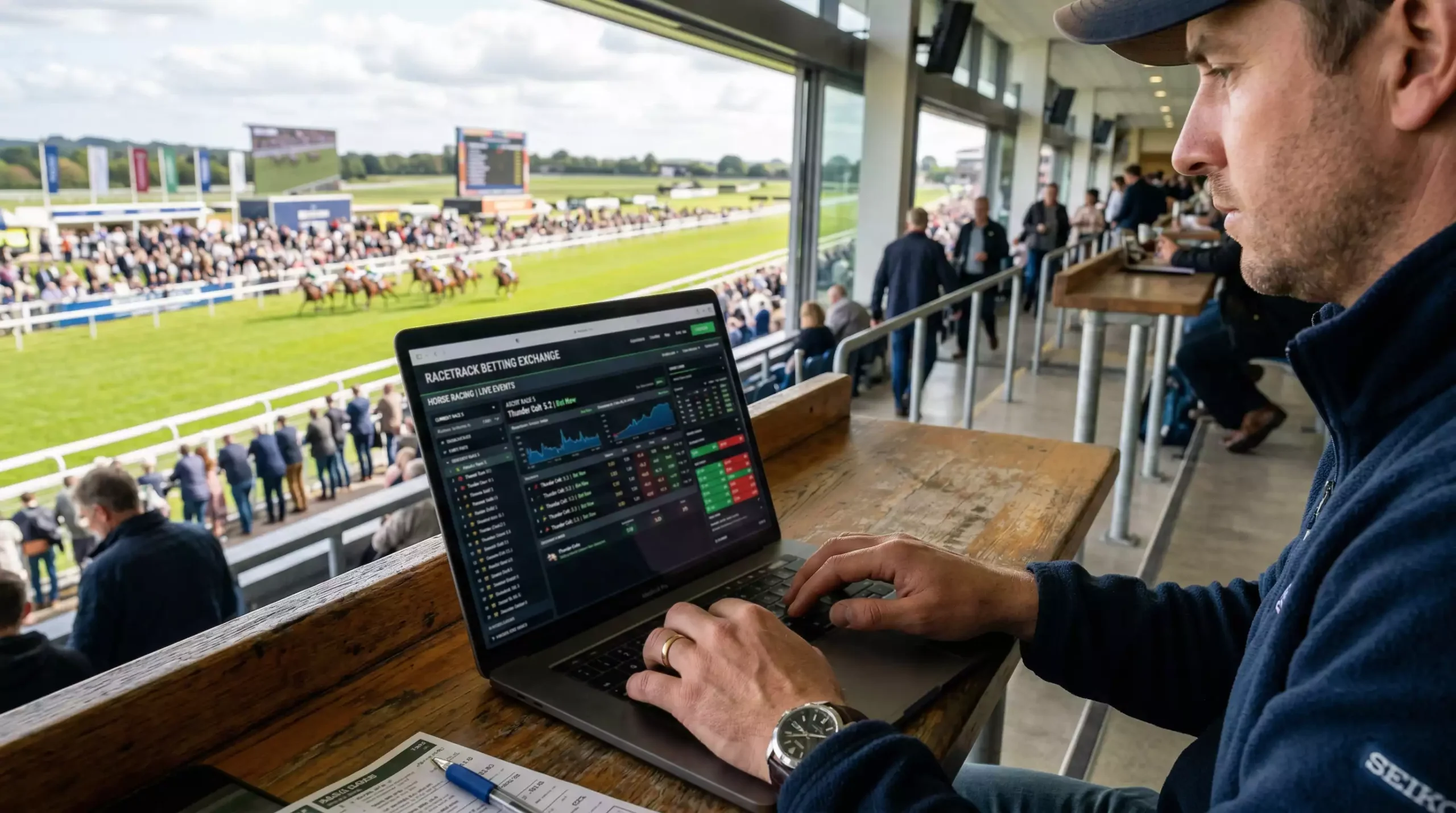
The exchange does not just offer different odds — it offers different information. A traditional bookmaker gives you a price and invites you to take it. Betfair and other betting exchanges give you a live, constantly updating market where thousands of participants are expressing their opinions with real money. The price on the exchange is not set by a trader in a back office; it is the product of collective supply and demand, and the movements in that price carry signals about how informed money views a horse’s chance.
For punters who learn to read those signals, the exchange becomes a tool for selection as much as a platform for execution. This guide covers how to extract information from exchange data, the three ways to use the exchange (back, lay, trade), and the practical question of when to take an early price versus waiting for the Betfair Starting Price.
The exchange reveals two things that a bookmaker’s odds do not: volume and direction. Volume tells you how much money has been matched on a particular horse. Direction tells you whether the price is shortening (more people backing it) or drifting (more people opposing it). Both carry information.
Volume. A horse with £50,000 matched in the win market has attracted serious attention. A horse with £500 matched has not. The volume itself does not tell you whether the money is smart or casual, but in most races the highest-volume runners include the horses that the best-informed participants consider live contenders. Volume is a proxy for confidence — not your confidence, but the market’s.
Price movement. A horse that opened at 8.0 on the exchange on the morning of the race and has been backed into 5.0 by post time has attracted sustained support. That movement may reflect trainer information, positive paddock reports, going changes that suit the horse, or simply sharp punters who spotted value early. Whatever the cause, a shortening price on the exchange is a positive signal — it means people with money at risk believe the horse has a better chance than the original price implied.
Drifting prices carry the opposite signal. A horse that opened at 4.0 and has drifted to 7.0 is being actively opposed. The drift may reflect negative information (poor paddock appearance, jockey change, going deterioration) or simply a lack of interested backers. Either way, a sustained drift on the exchange is a warning that the market has reassessed the horse’s chances downwards.
The academic evidence supports the exchange’s informational value. Research by Smith and Vaughan Williams, published in ScienceDirect, found that the favourite-longshot bias — the tendency for longshots to be overbet and favourites to be underbet — has declined since the introduction of betting exchanges. The exchange improves market efficiency by allowing informed punters to express their views more directly, which means the exchange price is, on average, a better reflection of a horse’s true chance than a bookmaker’s price.
The exchange offers three distinct approaches to horse racing, and understanding which one suits your method is essential.
Backing on the exchange works exactly like backing with a bookmaker — you are betting that a horse will win. The difference is the price. Exchange prices are typically larger than bookmaker prices because there is no built-in overround; instead, Betfair charges a commission (usually 5 percent) on winning bets. For punters who back at longer odds, the exchange often offers significantly better value. On short-priced favourites, the advantage is smaller.
Laying is the exchange’s unique feature. When you lay a horse, you are betting that it will not win — you are acting as the bookmaker. If the horse loses, you keep the backer’s stake (minus commission). If it wins, you pay out at the agreed odds. Laying is most useful when your analysis identifies a horse that the market has overrated — a favourite that you believe has a lower chance of winning than its price implies. The horse racing betting market in the UK generates £766.7 million in gross gambling yield from remote betting alone, according to the Gambling Commission, and within that market the exchange handles a significant share of the action on major races.
Trading combines backing and laying to lock in a profit regardless of the outcome. You back a horse at a higher price and lay it at a lower price (or vice versa), creating a position where you profit from the price movement rather than the race result. Trading requires the price to move in your favour before the race starts, which means it works best on volatile markets where significant price shifts are common — typically big handicaps, early-morning markets and races where going changes can dramatically alter the competitive landscape.
The Betfair Starting Price (BSP) is calculated at the moment a race starts, based on the unmatched orders in the exchange pool. It is Betfair’s equivalent of the bookmaker’s SP, but it is typically more generous because it is derived from a liquid, commission-based market rather than an overround-based book.
The question of when to take an early price versus waiting for BSP depends on the situation. If you believe the horse will shorten (attract money) between now and the off, taking the current price locks in a higher return. If you believe the horse will drift, waiting for BSP may give you a better price. For most punters, the practical rule is: take the price early if it represents value relative to your assessment of the horse’s chance, and let BSP handle the rest if you are uncertain about the price direction.
One specific scenario favours BSP: when you are betting on a horse that may not attract much exchange attention before the off (lower-profile races, midweek meetings). In these markets, the early exchange price can be volatile and thinly traded, meaning you might get matched at an unrepresentative price. BSP, calculated from the full pool at the off, tends to be more stable and reflective of genuine market consensus.
Integrating exchange data into your selection process does not require you to become a full-time trader. A few simple habits add a valuable layer to conventional form study.
Check the exchange market an hour before the race. Note which horses have significant volume and which way the prices are moving. If a horse you have shortlisted from form is also attracting exchange support (shortening price, high volume), your confidence in the selection increases. If it is drifting on significant volume, investigate why before committing your stake.
Use the exchange as a second opinion, not a replacement for form. The exchange tells you what the market thinks. Your form study tells you what you think. When the two agree, bet with conviction. When they disagree, proceed with caution — either the market knows something you do not, or you know something the market has missed. The answer determines whether you bet, reduce your stake, or pass the race.
