
 Available in US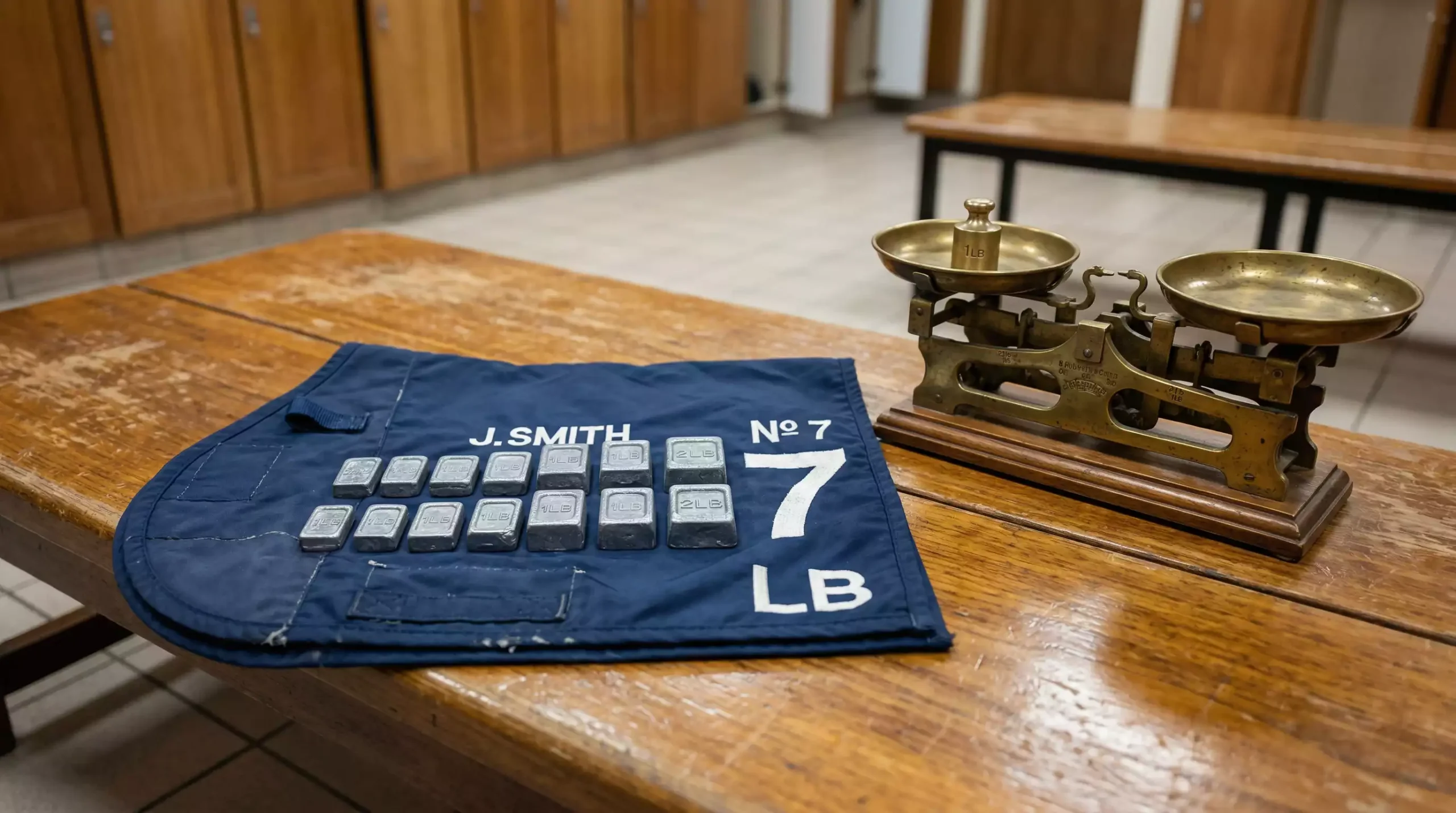
The handicapper’s job is to make every horse equal. Your job is to find the ones he has got wrong. That tension sits at the heart of handicap racing in Britain, a format that accounts for the majority of races on the daily card and generates the bulk of betting turnover. Every horse in a handicap carries a weight determined by its official rating — a number assigned by the BHA’s team of handicappers designed to give each runner a theoretically equal chance of winning.
If the system worked perfectly, every handicap would finish in a dead heat. It does not, of course, because horses are not machines. They improve, they decline, they respond to conditions in unpredictable ways. The official rating is a snapshot of assessed ability at a given moment, and by the time race day arrives, reality may have moved. Finding the horses whose actual ability exceeds their current mark is the single most profitable angle in handicap betting — and understanding how the rating system works is the first step towards doing it consistently.
The British Horseracing Authority employs a team of professional handicappers whose job is to assess every horse that races in Britain and assign it a numerical rating. The scale runs from the low 40s for the weakest horses in the system up to 130 or higher for elite Group 1 performers. Each point on the scale corresponds, in theory, to one pound in weight. A horse rated 90 is considered to be three pounds — or three lengths — better than one rated 87.
The process begins after a horse’s first three qualifying runs. Until then, the horse races off an assessor’s estimate or runs in non-handicap races where no official mark is required. Once the handicapper has enough evidence — three completed runs in races under BHA rules — the horse receives its initial rating. That rating is based on the handicapper’s assessment of the form shown, adjusted for the quality of opposition, finishing margins, weight carried and conditions.
After every subsequent run, the rating can be adjusted. A horse that wins or runs well may be raised; one that disappoints may be lowered. The adjustments are published weekly, typically on a Tuesday, and are effective for entries made from that point onwards. The size of the adjustment depends on the strength of the evidence. A horse that wins a competitive handicap by three lengths on a course where the form has worked out well might go up 6lb or more. A horse that finishes a close fourth in a moderate race might stay on the same mark or move by a single pound.
The handicapper also considers class par — the standard speed figure for a given grade of race — when calibrating ratings. Analysis by Caan Berry demonstrates that horses running below class par win only about 4 percent of handicaps, which gives empirical support to the handicapper’s framework. The rating bands broadly correspond to race classes: horses rated 0–55 compete in Class 6 and 7; those rated 56–70 in Class 5; 71–85 in Class 4; 86–100 in Class 3; 101–115 in Class 2; and 116 and above in Class 1 and Pattern races. These bands are guidelines rather than rigid boundaries, but they illustrate how the rating system creates a hierarchy that channels horses into appropriate company.
The real skill in handicap analysis is not knowing what a rating means — it is knowing when the rating is wrong. Three scenarios arise regularly, and each carries different implications for your betting.
Raised after a win. When a horse wins, the handicapper raises its rating to reflect the victory. The key question is whether the raise accurately captures the improvement or overshoots it. A horse that won a Class 5 by a neck under a strong ride might go up 4lb, which is probably fair. A horse that bolted up by six lengths in a weak Class 6 might go up 8lb, which could leave it too high for its next race. The market often adjusts for these cases, but not always quickly enough.
In a 20-year study of all British racing, favourites won approximately 34 percent of races overall. In handicaps, that figure is typically lower because the competitive nature of the format creates more unpredictable outcomes. This built-in uncertainty is what makes finding well-handicapped horses so valuable — the handicapper’s errors occur in a context where the market is already struggling to separate the runners.
Lowered after defeats. A horse that runs a string of poor races will have its rating reduced, sometimes substantially. This is the handicapper’s way of saying the horse is no longer the animal it once was — or at least, it is not currently performing to its previous level. For punters, a dropping rating is a double-edged situation. The horse may be genuinely declining, in which case the lower mark is still too generous. Or it may have been running over the wrong trip, on the wrong ground, or in the wrong class, and the lower mark represents an opportunity if the right conditions arrive.
Well-handicapped. This is the term trainers use when they believe a horse’s official rating underestimates its ability. A horse can become well-handicapped for several reasons: it may have improved physically since its last run (a three-year-old maturing, for instance); it may have been affected by conditions in its recent races that suppressed its performance; or it may have been deliberately campaigned over unsuitable trips to accumulate a lower mark before being targeted at a winnable race. The last scenario is a genuine training strategy, and while it borders on gamesmanship, it is entirely legal and widely practised.
The official rating translates directly into weight carried on race day. In a standard handicap, the top-rated horse carries the highest weight and every other runner carries less according to the difference in ratings. If the top weight is rated 95 and carries 10 stone (140lb), a horse rated 88 carries 9 stone 7lb — seven pounds less, reflecting the seven-point gap in their ratings.
The assumption underpinning this system is that one pound of weight equals one length over a given distance. This is a simplification — the actual impact of weight varies with distance, going and individual horses — but it is the working principle the handicapper uses. Over longer distances, weight tends to have a greater effect because the horse carries it for longer. Over sprints, it matters less because the margin of speed difference is smaller and the race is over quickly.
There are weight limits that constrain the system. Most flat handicaps have a minimum weight of 8 stone 2lb (114lb), which means a horse whose rating would put it below that floor still carries 8 stone 2lb. Such a horse is said to be “out of the handicap” — it is carrying more weight than its rating suggests it should, which is a disadvantage. Conversely, the top weight in a competitive handicap might carry 10 stone or more, and some trainers deliberately avoid races where their horse would be burdened with high weight, preferring to wait for a contest with a lower ceiling.
For punters, the practical takeaway is straightforward. Look at the weight a horse carries relative to its rating and relative to the rest of the field. A horse carrying significantly more weight than it has won off before is at a disadvantage. A horse running off its lowest career weight, or close to it, has the handicapper’s assistance — whether that assistance is enough depends on everything else in the form picture.
The search for well-handicapped horses follows a few reliable patterns. None is guaranteed, but each identifies situations where the official rating is more likely to underestimate a horse’s current ability.
Horses dropping in class after a rating cut. A horse rated 86 that has been running in Class 3 and posting figures of 78–80 looks outclassed. But if the handicapper drops it to 80 and it is entered in a Class 4, the picture changes. The horse may have been running below its best because it was facing stronger opposition. At a lower level, on a kinder mark, its form might be enough. Check whether the poor recent runs have identifiable excuses — wrong going, bad draw, unsuitable pace — before assuming the decline is permanent.
Three-year-olds in autumn handicaps. Young horses improve at different rates, and the handicapper can only adjust based on evidence from completed races. A three-year-old that spent the summer learning its trade and finishing mid-division may have improved significantly between its last run and its next appearance. If the rating has stayed the same or dropped while the horse has matured, you have a natural edge. This angle works best in September and October, when the summer experience has had time to translate into physical development.
Horses returning from a break with a stable in form. A horse that last ran 60 days ago and is now reappearing from a yard in strong current form is worth a second look. The break might have allowed recovery from a minor issue, and the trainer is choosing to bring the horse back now — a time when the yard is firing. Combine a fresh horse, a good mark and trainer confidence and you have a handicap betting angle that the racecard alone will not reveal.
Winners at the weights. After a horse wins a handicap, it faces a rating rise. But sometimes the rise is modest relative to the manner of victory. A horse that won a 12-runner handicap smoothly, with the jockey barely moving, might go up only 4lb because the official margin was just a length. The official result understated the performance. If the speed figure confirms the horse ran well above class par, the new mark may still be generous enough for another win at the same level.
In every case, the principle is the same: look for the gap between what the handicapper thinks a horse can do and what the evidence suggests it actually can. The rating is an opinion expressed as a number. Your analysis decides whether that opinion is right.
