
 Available in US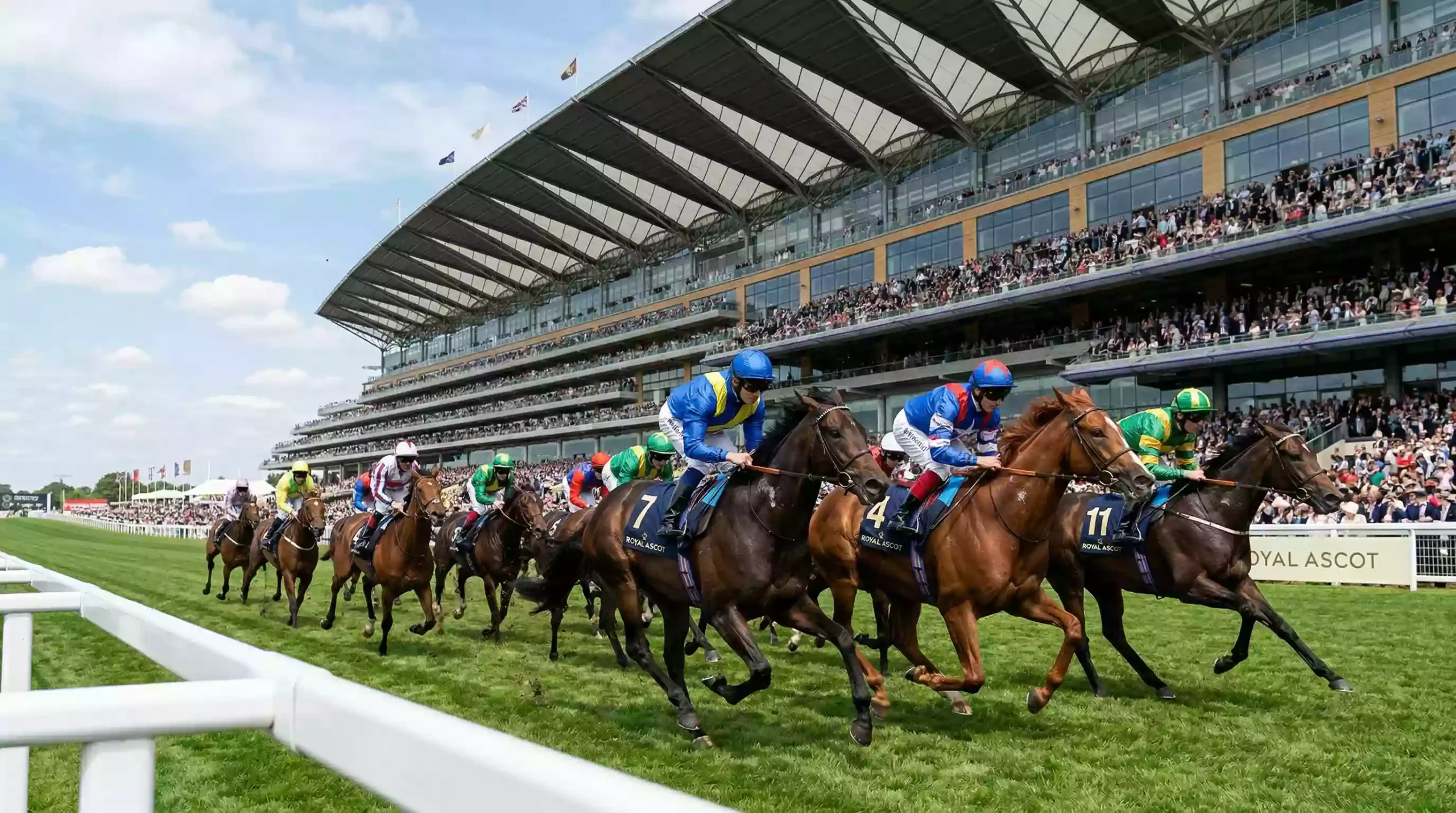
Royal Ascot is the exam — form study is the revision. Five days in June, 35 races, the best flat horses in Europe and beyond assembled on a course that tests speed, class and adaptability in equal measure. The Royal Meeting is not like a midweek card at Wolverhampton. It is the highest concentration of quality flat racing on the British calendar, and the selection challenges it presents demand a sharper, more disciplined approach than everyday form study.
What makes Ascot distinctive as a betting challenge is the intersection of three factors: draw bias that operates differently on the straight course and the round course, a class level that exceeds most horses’ previous experience, and the presence of international raiders — particularly from Ireland and France — whose form requires careful translation. Punters who apply their standard weekday method without adjusting for these Ascot-specific dynamics tend to underperform at the Royal Meeting. This guide isolates the data that matters and shows you how to use it.
Ascot’s draw bias is more nuanced than at most UK tracks, because the racecourse features two distinct configurations: a straight course (used for races up to a mile) and a round course (used for races beyond a mile). The draw operates differently on each, and understanding both is essential for Royal Ascot selection.
On the straight course, the draw bias is influenced by the positioning of the running rail and the camber of the track. In large-field sprint handicaps — the Wokingham, the Hunt Cup, the Buckingham Palace — the draw can be decisive. The bias shifts depending on the going and where the ground is riding fastest, which can change between days or even between races on the same afternoon. In general, when the ground is on the faster side, the stands’ rail (high numbers) tends to offer a slight advantage on the straight course because the ground closer to the rail is typically firmer and less worn. On softer going, the picture reverses as horses on the far side find better footing.
The contrast with a track like Chester is instructive. At Chester, draw bias is extreme and consistent — data from Smarkets shows 63 percent of winners in five-furlong Chester races come from stalls one to three. At Ascot, the bias is present but less binary. It rewards punters who study the going report closely on the day rather than applying a blanket rule, and it punishes those who assume the draw is irrelevant just because the track is a wide, galloping course.
On the round course, the draw matters less in isolation but still interacts with pace and race tactics. In races over a mile and a quarter to two miles, a low draw can be beneficial because it allows the horse to take up a position on the inside rail early without wasting energy crossing the field. However, the long Ascot straight — one of the longest finishing straights in British racing — means that horses can make up ground from poor early positions if they have the stamina and class to sustain a late run. The round course rewards ability more than the straight course, where positional luck plays a bigger role.
Royal Ascot races operate at the upper end of the class spectrum. The meeting features Group 1, Group 2 and Group 3 races alongside prestigious handicaps that attract the best-rated horses in the country. The practical consequence for punters is that class par at Ascot is higher than at any other fixture on the calendar, and horses that have been winning comfortably at a lower level may find themselves outclassed when they step up to the Royal Meeting.
Analysis of speed figures across UK racing consistently shows that horses running below class par win approximately 4 percent of handicaps. At Ascot, where the par is elevated by the quality of the competition, that filtering effect is even stronger. A horse that has been posting RPRs of 95 in Class 3 handicaps and is now entered in a Royal Ascot handicap where the class par is 105 has a mathematical problem that no amount of positive form reading can solve. Speed figures are your best defence against the class trap — they tell you, in objective terms, whether a horse’s recent performances are in the range required to compete at Royal level.
The class factor is especially important for horses stepping up from lower-grade racing for the first time. Royal Ascot attracts many entries from trainers hoping their improving horse can handle the jump in quality. Some can. Many cannot. The difference often comes down to whether the horse has shown a progressive speed figure trend — a sequence of improving ratings that suggests genuine development — or whether its wins at a lower level simply reflected weak opposition rather than innate talent.
Royal Ascot is dominated by a small number of training operations, and understanding their patterns gives you a framework for assessing each runner’s credentials.
Aidan O’Brien’s Ballydoyle operation in Ireland sends the largest single contingent to the meeting each year. O’Brien’s runners are typically concentrated in the Group races rather than the handicaps, and his record in the top-level contests — the Gold Cup, the Prince of Wales’s Stakes, the St James’s Palace Stakes — is unmatched. O’Brien frequently runs multiple horses in the same race, using them tactically to control the pace and maximise the chance of at least one winning. When you see three O’Brien runners in a Group 1, studying their likely race positions and which one the stable considers the primary hope (usually indicated by jockey booking — Ryan Moore rides the first choice) is essential.
Charlie Appleby’s Godolphin string is the other superpower. Appleby’s strike rate in 2025 UK flat racing was 33 percent overall, according to data from RaceShare, and his Ascot record is consistently strong. Appleby’s horses tend to be well-prepared, well-drawn (the operation is meticulous about race planning) and ridden by William Buick, who is one of the most effective big-race jockeys in the country. When an Appleby runner is declared for a Royal Ascot race, it is almost always a considered, targeted entry rather than a speculative one.
Among British-based trainers, Andrew Balding, John and Thady Gosden, William Haggas and Karl Burke are the names that appear most frequently at the Royal Meeting. Each has a different profile — Balding’s strength is volume and depth, the Gosdens specialise in top-class middle-distance horses, Haggas is effective with progressive types, and Burke punches above his weight with sprinters and two-year-olds. Recognising which trainers are most effective in which race types at Ascot allows you to weight trainer form appropriately rather than treating all entries equally.
A practical Royal Ascot selection method applies three filters in sequence, each narrowing the field before you commit to a final assessment.
Filter one: class. Check speed figures against Ascot-level class par. If a horse’s best recent RPR is more than 5lb below what typically wins the race it is entered in, it is unlikely to be competitive. This single filter removes a significant portion of the field in most races, particularly in the big handicaps where entries can number 20 or more.
Filter two: draw and going. Study the going report on the morning of racing and assess which part of the track is riding fastest. Cross-reference with each horse’s stall position. In straight-course races, a horse drawn on the wrong side of the track on the day is fighting against the course regardless of its form. On the round course, the draw is less critical, but pace position matters — a horse that needs to lead from a wide draw in a slowly run Group race may waste energy securing its position.
Filter three: connections. Give additional weight to runners from the major Ascot operations — O’Brien, Appleby, the Gosdens, Haggas, Balding. These trainers have the experience, the ammunition and the race-planning capability to have their runners peak for the Royal Meeting. First-time Royal Ascot runners from smaller yards are not impossible winners, but they should carry a higher burden of proof from form and speed figures.
After applying these three filters, you will typically be left with two to four serious contenders per race. The final selection comes down to the specifics: which horse’s recent form profile is the strongest, which has the best going and distance record, and — critically — which is the most attractively priced. At a meeting where market efficiency is high because of the intensity of media coverage and public interest, the edge is often found not in identifying the best horse but in identifying the best-value horse from a shortlist of genuine contenders.
