
 Available in US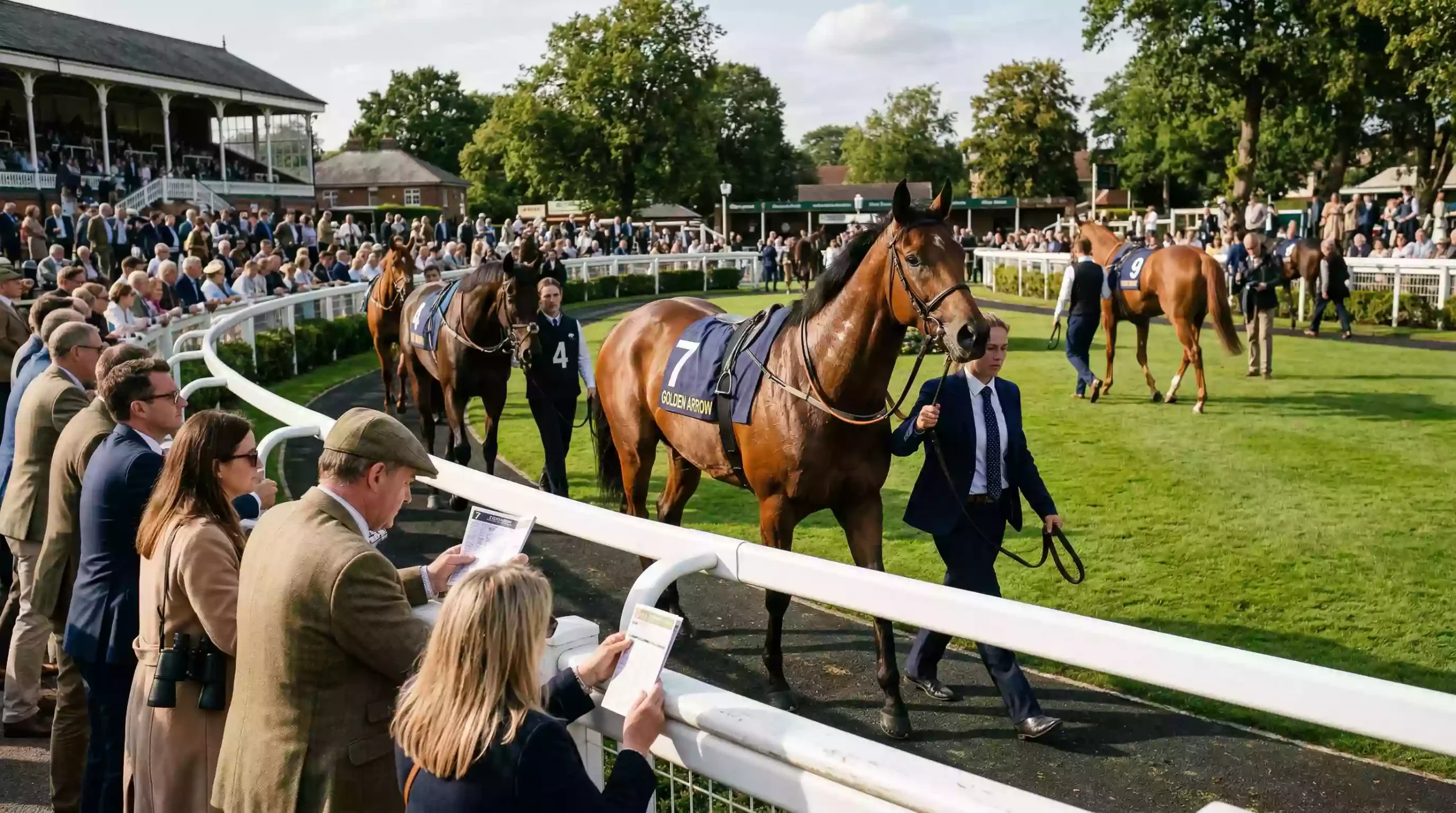
The paddock is the only factor you cannot find in a spreadsheet. Every other element of form analysis — speed figures, going records, trainer stats, draw data — exists as a number you can look up from your sofa. The parade ring demands something different. It asks you to use your eyes, to read a living animal’s physical condition in the minutes before it races, and to make a judgment that no algorithm can replicate.
That does not make paddock assessment magical or infallible. It is a skill, and like any skill it is sharpened by repetition and blunted by bias. But for racegoers who attend in person — and Britain’s racecourses welcomed over 5.03 million visitors in 2025, the first time attendance exceeded five million since 2019, according to the BHA Racing Report — the pre-race parade offers information that the racecard cannot provide. A horse might look like a contender on paper and a non-entity in the flesh. Conversely, a horse you nearly dismissed might walk into the ring with the kind of physical presence that changes your mind.
This guide covers what to look for, what to avoid reading too much into, and how to use paddock observations alongside — not instead of — the form you have already studied.
A horse that is fit, healthy and ready to perform shows a cluster of physical traits that experienced racegoers learn to recognise. No single trait is decisive on its own — but when several appear together, they paint a picture of an animal in peak condition.
Coat. A fit horse’s coat gleams. It has a deep, lustrous sheen that reflects light cleanly, sometimes described as looking like a freshly polished conker. This shine comes from good nutrition, consistent work and underlying health. A dull, staring coat — one that looks dry, flat or slightly rough — can indicate that the horse is not thriving, whether from a low-grade virus, inadequate fitness or simply being past its peak. Coat quality varies by season: a horse in summer will naturally carry a finer, shinier coat than one in November, so adjust your expectations accordingly. What you are looking for is relative quality — does this horse’s coat look better than the others in the ring?
Muscle tone. A racehorse in full training is an extraordinary athlete, and the muscle definition should reflect that. Look for clean, well-defined quarters (the large muscles behind the saddle), a powerful shoulder and a lean, tucked-up belly. A horse carrying excess condition — too much weight around the girth or a bulky, undefined look through the quarters — may not be fit enough to sustain its effort in the closing stages. Equally, a horse that looks too light, with ribs visible and a hollow look through the back, may have been over-trained or is coming back from a problem.
Eye. This is the most subjective of the paddock indicators, but experienced observers swear by it. A horse with a bright, alert eye — ears pricked, head up, taking in its surroundings with interest rather than anxiety — is typically in a positive frame of mind. A dull or listless eye, or one where the horse seems withdrawn and uninterested, can suggest the animal is not feeling its best. It is worth acknowledging that some horses are naturally calm and do not show much animation in the paddock, so this trait is best read in the context of what you know about the individual.
Walk. Watch how the horse moves. A free, athletic walk with good reach through the shoulder and a relaxed but purposeful stride suggests a sound horse. Stiffness, short-stepping, uneven gait or a reluctance to walk out can indicate a physical issue — anything from a minor muscle tightness to a more significant lameness. Pay particular attention to the action behind: if the horse appears to drag a hind leg or move unevenly through the quarters, that is a warning sign that the form on paper cannot reveal.
The parade ring is not a beauty contest. You are not looking for the most handsome horse — you are looking for the fittest. A plain, workmanlike animal that gleams, strides out freely and carries itself with athletic balance is a better paddock pick than a beautiful horse that looks dull in the coat and short in its stride.
Negative signals in the paddock are often more reliable than positive ones, because a horse that looks distressed or uncomfortable is unlikely to perform to its best regardless of what the form says.
Sweating. Some sweating is normal, especially on warm days or for horses that are naturally keen. What you are watching for is excessive or unusual sweating — dark, foamy patches between the hind legs, under the girth area, or behind the ears when the weather does not warrant it. This kind of sweating typically signals anxiety, and an anxious horse wastes energy before the race even begins. The crucial distinction is between a horse that is warm from walking and one that is lathered from stress. If the horse’s neck and flanks are streaked with white foam and it has not done anything more strenuous than walk around the parade ring, that is a concern.
Agitation. A horse that will not settle — jogging, pulling its handler, throwing its head, kicking out — is burning fuel it will need later. Some animals are naturally fiery and race well despite their pre-race antics (there are famous examples of brilliant but temperamental horses), but for the average runner, paddock agitation correlates with below-par performance. If you do not know the horse’s individual temperament, default to treating agitation as a negative.
Reluctance. A horse that plants its feet, refuses to walk, or needs to be dragged around the ring is sending a different signal from an agitated one. Reluctance suggests the horse does not want to be there — and while the reasons range from discomfort to sour temperament to genuine pain, none of them point towards a winning performance. Reluctance at the start (refusing to load into the stalls or hesitating at the tape) is a recognised form factor and carries even greater weight than reluctance in the paddock.
Physical abnormalities. Bandages, excessive use of boots, a visible wound or swelling, or an uneven gait that is apparent even at walk — these are signals that most punters miss because they are focused on the horse’s overall appearance. A horse wearing boots or bandages is not necessarily a problem (many trainers use them routinely), but if you notice something on one horse that is absent from all the others in the ring, it is worth investigating why.
The reality of modern racing is that most bets are placed remotely. Online betting turnover on horse racing in the UK reached £7.88 billion in the financial year ending March 2025, a figure that dwarfs on-course betting and confirms that the vast majority of punters never see the parade ring in person. Does that make paddock assessment irrelevant for the sofa punter? Not entirely — but it does limit what you can observe.
Television coverage of major meetings typically includes a paddock walkthrough before each race, with the camera panning across the runners while a presenter offers commentary. The broadcast rarely gives you enough time with any individual horse to make a thorough assessment, but it can flag the extremes. A horse that is dripping with sweat, refusing to walk, or looking markedly different from its rivals will be visible even in a brief pan. ITV Racing and Racing TV both show pre-race paddock footage at bigger meetings, and the latter offers more extended coverage on its dedicated channel.
Race replays provide another angle. Sites that host race replays often include the pre-race build-up, which means you can go back and study how a horse looked before a race it won or lost. Over time, this gives you a retrospective database: if you notice that a particular horse always looks agitated before it wins, or always carries its head low before it runs poorly, you have learned something about that individual that the form figures will never tell you. This kind of pattern recognition is where paddock assessment adds genuine value for remote punters — not as a live tool, but as a research tool that enriches your understanding of individual horses.
The paddock works best as a confirmation tool, not a primary selection method. You would not back a horse solely because it looked well in the ring, just as you would not dismiss one solely because it sweated up. What you are doing is adding a physical layer to the analytical work you have already done.
The most productive approach is to arrive at the paddock with a shortlist already drawn from form study. You have identified two or three horses that the data supports. Now you watch them walk around the ring and ask a simple question: does the physical evidence match the paper evidence? If your top pick on form also looks the part — gleaming coat, athletic stride, alert demeanour — your confidence increases. If it looks flat, dull or agitated, you might reconsider or reduce your stake.
Simon Rowlands, the former Head of R&D at Timeform, has noted that information from trainers and jockeys tends to be overvalued by punters. The paddock sits at the intersection of visual observation and verbal cues — you see the horse, but you also hear the pundits relaying what the connections said. Resist the temptation to weight the words over what your eyes are telling you. A trainer saying “he looks fantastic” while the horse behind him is lathered in sweat and jogging on the spot should prompt scepticism, not reassurance. Trust the physical evidence first. Use form as the foundation, paddock observation as the confirmation, and verbal reports from connections as the least reliable layer. That hierarchy keeps your analysis grounded in evidence rather than narrative.
